
White Label Skincare Manufacturers: MOQ, Lead Time, and What to Expect From the Process
Most founders searching for white-label skincare manufacturers are not just comparing formulas. They want to know what actually happens after they pick a supplier. What are the minimums? When does production start? What if the label needs changes? These questions matter far more than ingredient lists when a launch is on the line.
The uncertainty around minimums, packaging, timelines, and approval steps is what early-stage brands lose momentum to. White label can be the fastest path to market, but only when founders understand the process before they commit.
In this blog, we will walk you through the process clearly, from sample order to production approval, with real attention to MOQ, lead time, and where ingredient positioning fits.
What White Label Skincare Means for Early-Stage Founders
White-label skincare means working with pre-formulated products that a founder brands and sells under their own name. The formula already exists. The founder selects the right products, applies their branding, and brings them to market.
This differs from private label, which allows some formula adjustments, and from full custom manufacturing, which starts from scratch. Our private-label vs. white-label comparison lays out that distinction clearly.
For early-stage brands, white-label cuts upfront development risk. There is no lengthy R&D phase, no stability testing, and no waiting on a formula that may not perform. Founders can move faster, test real demand, and invest in customization once they know what their customers respond to.
That speed advantage matters more now. According to McKinsey's State of Beauty research, beauty brands need tighter execution and clearer value positioning to compete. White label gives founders a direct route to both. The next section shows exactly how that process works.
How the White Label Process Works From Sample to Launch
Working with white-label skincare manufacturers gets a lot less stressful when the process is published and predictable. Indigo's workflow moves through five stages:
- Order Samples
- Place Order
- Label Design
- Pre-Production Samples
- Start Selling
Each step has a defined purpose, and founders know what to expect throughout the process.
Alongside the white-label route, we also support private-label adjustments, custom formulations, and branding and packaging guidance. These options sit within the same process, so founders can choose the level of involvement that fits their timeline and budget.
What Happens During Sampling and SKU Selection at Indigo
Founders can order samples directly through Indigo's website or through an account representative. Sample pricing matches the standard unit price, and samples arrive without labels, giving founders a clean look at the product itself. This is the stage to evaluate texture, absorption, and routine fit before committing to a larger order.
A practical note for early founders: shortlist two or three SKUs first. A focused starting point reduces decision fatigue and makes it easier to build a coherent brand story from day one.
What Happens During Label Approval and Final Sign-Off
For founders using Indigo's labels, the next step is to send a logo, review a PDF proof, and approve it before printing begins. Founders using their own labels or packaging ship those components in at this stage.
Production begins after final approval, or once packaging and labels are received, depending on the order setup. Each checkpoint keeps things moving without surprises.
MOQ, Payment, and Ordering Details to Know Up Front

These are the questions founders search for most, so here are the direct answers for our pricing and ordering:
- Sample Orders: No minimum order quantity
- Product Orders: $250 minimum
- Orders Including Custom Formulas: $500 minimum
Orders can be placed online, by email, or by phone. That flexibility helps founders compare communication styles across suppliers before committing.
One important detail: Indigo cannot proceed on an order until it is paid in full. Knowing this upfront prevents delays and keeps the timeline on track.
These thresholds make white-label genuinely accessible. Testing a small assortment, reviewing real-world performance, and scaling from there is a practical path with these minimums in place.
What Shapes Lead Time and What Founders Should Expect
White-label is the fastest route on Indigo's platform, but actual timing still depends on several variables:
- How quickly do founders review samples
- How long does label approval take
- Whether packaging components are ready
- Which order type is in play
White-label samples ship within 1-2 weeks. After digital label proof approval and with all components on hand, launches often follow within a few weeks. That is a short timeline compared to most manufacturing routes.
Private-label adjustments and custom formulations take longer because design review, packaging procurement, R&D, and validation all add time. Lead time is a variable process, not a fixed promise, and planning around the approval steps is where founders avoid unnecessary delays.
What Founders Often Miss About Pre-Production Approval
Small stock product orders typically move forward with a digital proof rather than a labeled pre-production sample. Large or custom orders may include a pre-production sample before production begins. The final labeled sample is part of the process, and a $50 revision fee applies if changes are needed at that stage.
Label review is part of launch readiness, not just aesthetics. The U.S. Food and Drug Administration sets requirements for cosmetic labeling, and reviewing those guidelines before finalizing a label design saves time and avoids corrections later.
How to Choose Skincare Ingredients Without Slowing the Launch
A compact starter routine outperforms an oversized launch almost every time. White-label works best when founders test a focused concept quickly, read the response, and build from there. 3-5 SKUs with a clear skincare-ingredients story will always be easier to sell than 10 products with no obvious through-line.
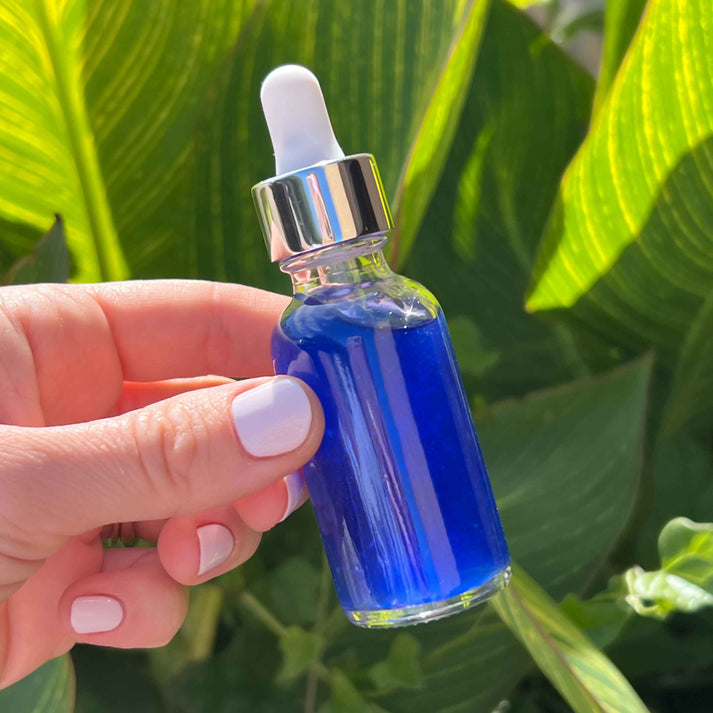
Indigo's current catalog offers a practical starting point. A Gel Cleanser, Toner, and Daytime Moisturizer create a solid base routine. Serums like Hyaluronic Acid, Vitamin C, Bakuchiol, and Niacinamide help shape a more targeted story built around specific audience needs, whether that is hydration, brightening, or gentle support for aging.
Ingredient choice should follow audience needs rather than be driven by trends. That decision also shapes product page copy, bundle logic, and how clearly customers understand what they are buying. A founder who knows why they chose each product will present it more confidently.


Where Natural and Vegan Positioning Fit White Label

Plant-based and vegan positioning should be part of the brand strategy from the start, not something added at the final packaging stage. Founders who decide on this direction early can select products that support that story consistently across the full assortment.
Indigo's vegan collection includes skincare products such as Gel Cleanser, Daytime Moisturizer, Nighttime Moisturizer, and Niacinamide Serum. These give founders a tangible starting point for building a natural skincare or vegan skincare brand.
Clear, specific claim language consistently outperforms broad buzzwords. Claims should stay truthful, substantiated, and cosmetic in nature. A product that "helps skin appear more balanced" or "supports a smoother-looking complexion" is a stronger commercial statement than one that promises transformation without evidence.
When White Label Is Enough and When to Customize
White-label is the right starting point for most founders. Private-label offers a more customized middle ground, while full custom formulation delivers the most differentiated result but takes the longest.
The practical approach is to launch with white-label first, test demand with a real audience, and move into deeper customization once the brand has proven traction. That sequence reduces risk and provides a clear commercial foundation for every customization decision.
FAQs
What is the typical MOQ for white-label skincare products?
MOQ ranges vary by manufacturer and product type. Some require large minimum runs, while others offer low-MOQ options suited to smaller brands. At Indigo, we offer low-MOQ flexibility that lets new founders start with manageable quantities, reduce upfront investment, and scale once they have market feedback.
Can I request a sample before placing a full order?
Yes, and we strongly recommend it. Sampling lets you evaluate texture, scent, and skin feel before committing to a full production run.
How long does it take to receive a white-label skincare order?
Typical lead times run from 2-6 weeks after order confirmation, depending on packaging, labeling complexity, and volume. Factors like custom packaging or multiple artwork revisions can extend the timeline, so building in a buffer when planning your launch is always a good idea.
What information needs to appear on a white-label skincare product label?
Standard skincare labels include the product name, net weight or volume, full ingredient list, directions for use, and your business contact information.
Clearer Choices Lead to Faster Launches
The best white-label skincare manufacturing process is the one that founders understand before they place an order. Sample flow, approval steps, MOQ thresholds, and lead-time variables are straightforward once they are laid out clearly.
Speed comes from narrowing the assortment, choosing a focused ingredient story, and working with a partner that publishes its process transparently. When the process is clear, founders spend less time second-guessing and more time building. That is where real momentum starts.
When you are ready to move from research into sample selection and launch planning, Contact Indigo Private Label to map out your first launch.


